

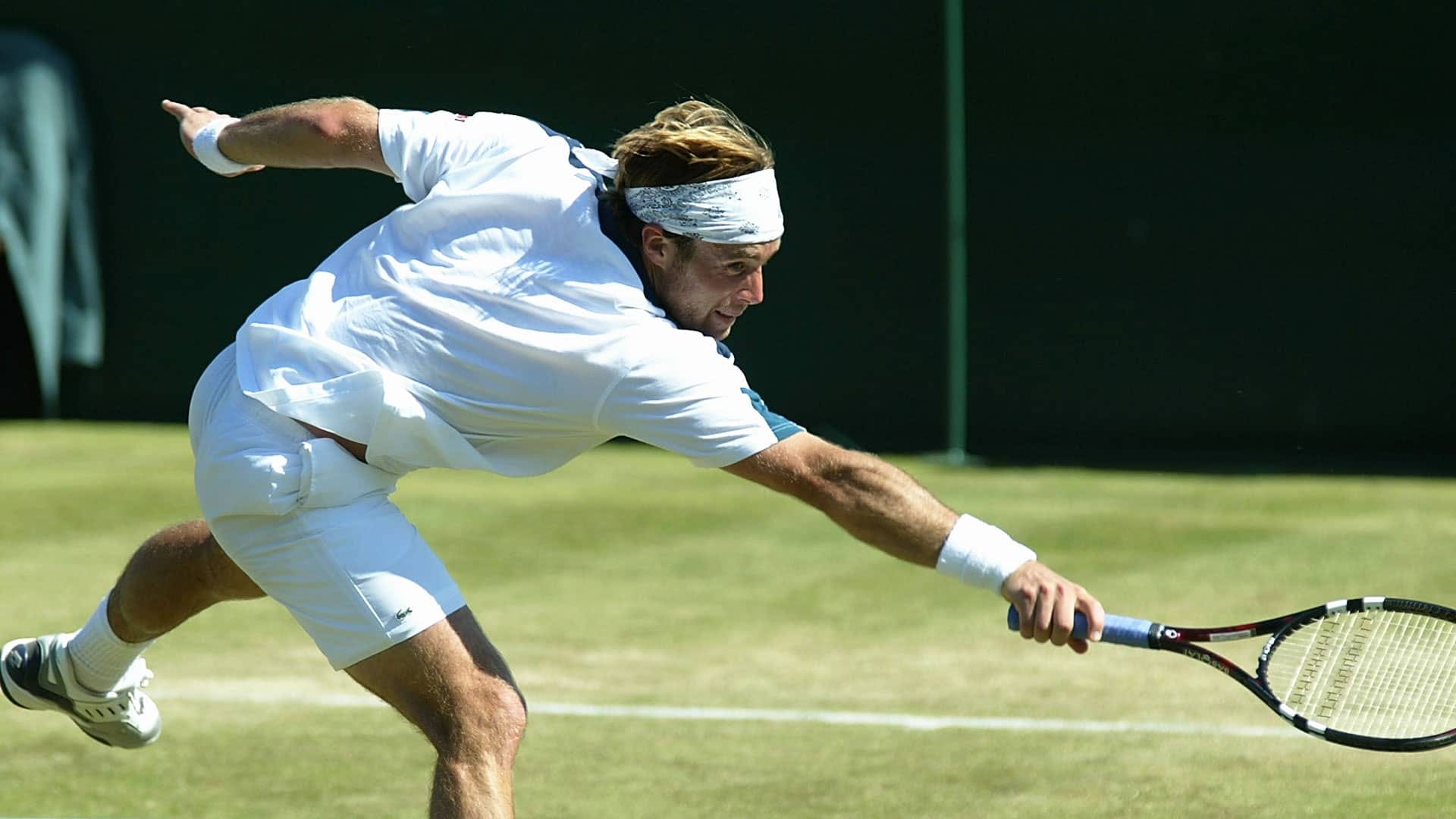
Lucky loser and world #145 George Bastl defeats Pete Sampras at Wimbledon in 2002. World #116 Sergi Stakhovsky shocks then seven-time champion Roger Federer at Wimbledon in 2013. World #117 Denis Istomin stuns Novak Djokovic at the Australian Open in 2017. After losing in the first round of qualifying for the previous five years, world #100 Lukas Rosol beat Rafael Nadal at SW19 in 2012.
Even the greatest players in tennis’ history can be defeated by players ranked well below them. What should have been a walk in the park turns into a shocking upset that leaves the viewer scratching their head: how can somebody ranked so low beat somebody ranked so high?
It all boils down to the fact the margins between winning and losing are incredibly small at the highest level. A passing shot here, an ace there, and a couple of well-placed forehands could be all that separates a top-five player and someone ranked outside the world’s top 100. Take the Novak Djokovic v Denis Istomin match - Djokovic won 193 points to Istomin’s 186 and still lost the match.
In 2020, the top 50 players in the ATP rankings played 42 matches against players ranked at least 200 places below them (from here on in referred to as the underdogs). On paper, the underdogs should not stand a chance of winning. The reality however, is far more intriguing.
In the first part of a two part article, we look at how the top 50 have fared against underdogs throughout the previous year.
The Results
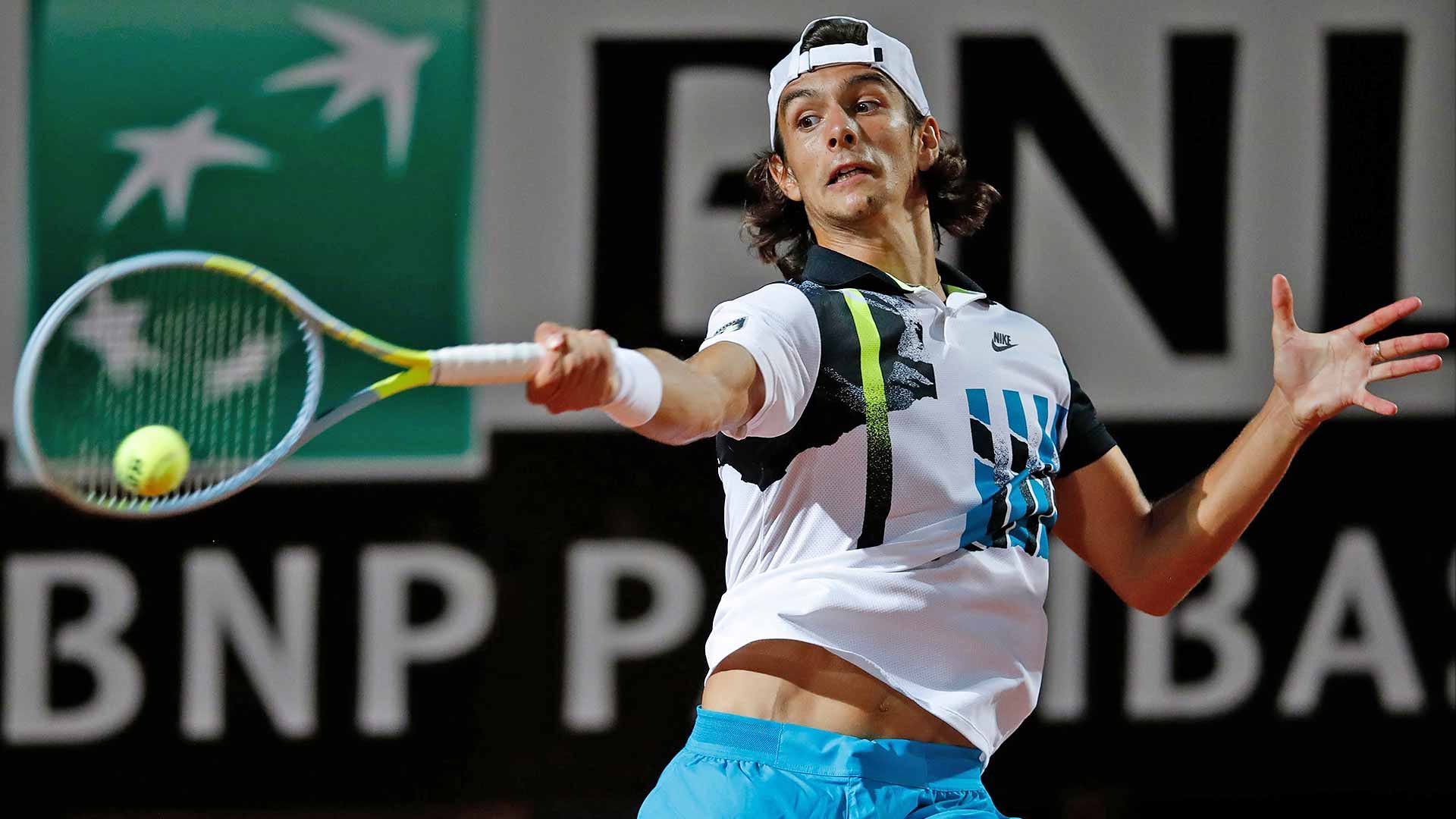
In the 42 matches where an ATP top 50 player was drawn against an underdog in 2020, the top 50 player won 32/42 matches. The young Italian phenom Lorenzo Musetti had the most wins when pitted against somebody more than 200 rankings above him, beating Stan Wawrinka and Kei Nishikori at the Rome Masters.
32/42 matches is equivalent to a 76.2% winning rate. Given the top 50 had a win rate of 70.5% in 2020 against any player ranked outside the top 50, this win percentage is not overly surprising,
The amount of points won by the favourite follows a similarly unsurprising trend. When the top 50 won a match against any player, including fellow top 50 opponents, they won an average of 54.7% of total points. This percentage increases to 56.5% of total points won when a top 50 opponent beat an underdog, a significant increase given the fine margins between winning and losing.
What is surprising is how many points the underdog won when they beat a top 50 opponent.
In 2020, any player that beat a top 50 player won an average of 53.8% of the total points. When an underdog beat a top 50 opponent, this statistic increases to 55.8%. This is perhaps indicative of the underdog having nothing to lose, swinging freely and carrying their momentum over the finishing line. At the very least, it shows that the underdogs have the potential to up their level against a better opponent.
Furthermore, the amount of straight set matches won by the top 50 player suggests the underdog’s ability to up their level, if only for brief periods of the match. When the top 50 won a match in 2020 against any player, the match was won in straight sets 62.3% of the time. Against a player ranked more than 200 places below them, this statistic was almost identical at 62.5% of the time; the top 50 dropped sets against players ranked well below them as often as they did against their peers.
Lights-out tennis from the underdogs
These statistics suggest the underdogs are capable of playing tennis above their usual standard. Given lights-out tennis might be their only chance of beating a top 50 player, they go for their shots, hitting this level for shorter periods of time to win sets, or they play out of their skin for the entirety of the match to seal the deal.
The underdogs are often able to keep the scoreline close and are able to play above their rankings. This begs the question; why are they not ranked higher than they are? In the second part of this article, we analyse these 42 matches to determine the small differences that separate the top 50 players from the underdogs.
The Analysis
From the above results, the underdogs are capable of causing an upset, or are at least able to frequently cause trouble for the top 50 players. Why are they not ranked higher than they are? What separates a top 50 player from an underdog?
The Serve
The most important shot in men’s tennis is arguably the serve. One way for lesser opponents to ensure they are in with a chance of beating a top-class opponent is to make a high percentage of first serves. The underdogs did a decent job of this on the whole.
The top 50 players had a first serve percentage of 60.8%.
The underdogs had a first serve percentage of 60.0%.
There is such an incremental difference between the two percentages, neither bracket of players definitively outperformed the other in this statistic.
Though both could land their first serve as often as the other, the effectiveness of their respective first serve differs greatly. This can be seen in the percentage of aces won.
The top 50 player aced on 9.5% of their serves.
The underdog aced on 5.05% of their serves.
The top 50 players hit an ace almost double the amount of times the underdogs did. When the difference between winning or losing is a few percentage points here or there, a few cheap points on serve could be all that is required. For an underdog to make the leap to the top 50, improvements in the power and placement of the serve are necessary.
Under pressure
Many professionals have said that mental strength is one of the defining factors in making it to the top of the game. A key performance indicator for one’s mental strength is in the highest pressure moments of a match; saving or converting break points.
The top 50 saved 66.3% (169/255) of the break points they faced.
The underdogs saved 60.6% (248/409) of the break points they faced.
In 2020, the top 50 saved 62.7% of the break points they faced against any opponent. A 3.6% increase is significant, indicating the top 50’s confidence in their serve against a lesser opponent. The underdogs were 1.9% shy of this average, suggesting they can still perform close to the level of the top 50 under pressure on serve in spite of losing the majority of the matches.
Turning this stat on its head is more revealing.
The top 50 converted 39.9% (163/409) of the break points they created.
The underdogs converted 33.7% (86/255) of the break points they created.
In 2020, the top 50 converted 40.2% of the break points they created. The top 50 slightly underperformed in break point conversion, even with their opponents having a statistically weaker serve than their top 50 peers. The top 50 have confidence in their service games but perhaps they feel the pressure to perform when returning a weaker opponent’s serve. The underdogs converted 6.5% less than this average, a huge drop off that in part is likely caused by the pressure of returning a better player’s serve.
Winners to unforced errors
The sample size for matches where winners to unforced errors were available as a statistic is only 22 (18 wins to 4 losses for the top 50) so this needs to be factored into any conclusions drawn.
From the matches where winners to unforced errors were available:
The top 50 player hit more winners than the lower-ranked player 68.1% of the time.
The top 50 player hit more unforced errors than the lower-ranked player 45.4% of the time.
The top 50 players are more likely to be the aggressor in the match, winning or losing on their terms. They hit more winners than the underdogs over two-thirds of the time but they almost split the unforced error count despite winning the vast majority of the matches.
This suggests that the top 50 player is able to outmuscle the opponent from the baseline. There are some matches available in the reduced sample size however, that show it is not as simple as one player being able to hit winners and the other not being able to.
Roberto Bautista Agut defeated Aleksandre Metreveli 6-0 6-0. Although the match ended in a double-bagel scoreline, the winner count was 19-13 in Bautista Agut’s favour. Metreveli had the power to potentially trouble Baustista Agut but could not find the consistency, ending with 28 unforced errors to Bautista Agut’s five.
Rafael Nadal defeated Sebastian Korda 6-1 6-1 6-2. The winner count was 15-21 in Korda’s favour by the end of the match. Nadal’s ability to grind his opponent down resulted in an unforced error count of 20-48, however. A winner count like this against such a great opponent shows that some players have the firepower to soar up the rankings and could potentially be en-route to greater things.
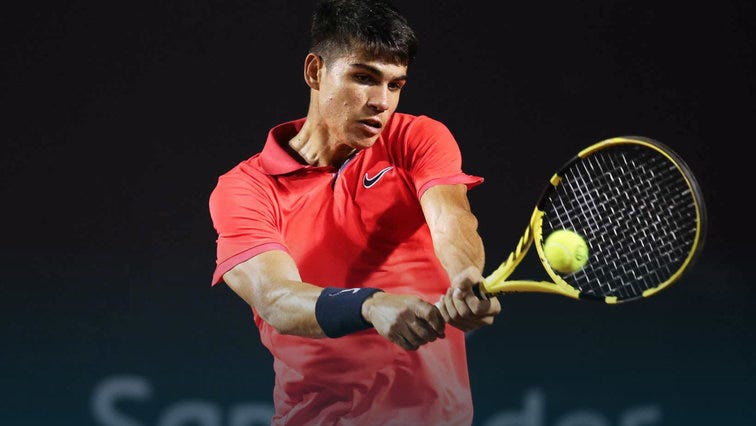
Carlos Alcaraz Garfia defeated Albert Ramos-Vinõlas 7-6 4-6 7-6. Another example of a younger player making their way through the rankings. At only 17 years old, Garfia hit 54 winners to 28 for Ramos-Vinõlas.
Arguably, any opponent within the top 700 has the potential to start hitting winners (Aleksandre Metreveli was ranked 679). The top 50 players cannot sit back and wait for the underdogs to get into a rhythm. A balance between consistency and aggression is key; any dip might give the underdog a chance to gain some momentum.
How to prevent the upset
Many of the metrics are close between the two brackets of players. Both had similar first serve percentages and the underdog was able to take at least a set off of the favourite in 37.7% of their losses, suggesting they could raise their level, even if only for a short period of time.
In order for a top 50 player to avoid being upset by an underdog, they should look to win cheap points off of their serve. Statistically in 2020, the top 50 players significantly outperformed the underdogs in aces hit. This likely contributed to the lesser amount of break points the top 50 player faced overall and the healthy amount of break points they were able to save.
A strong serve will also pile the pressure on the underdog to make the return on break points. The underdogs converted far less break points than the top 50 players, implying they were not as confident in these pressure moments. In general, the top 50 players were a lot better than the underdogs on the important points.
Finally, the top 50 players were often looking to take control of the match, proverbially living or dying by the sword. The underdogs have the latent ability to wrestle the momentum, particularly in this context when there is nothing for them to lose, so it is important that the top 50 player maintains a steady level of aggression.
The bottom line is clear; whether it is Novak Djokovic at the Australian Open or Roger Federer at Wimbledon, top 50 players should never underestimate their opponent.
All statistics sourced from http://www.tennisabstract.com/.